Begin
Inspiration
Film: The Temporal City
Design Studio 4B: Urbanism
Design Studio 3B: Charette - Baldwin Hills Skate Park
Comparison
Nomadism and Architectural Theory
Relationship
Nomadic Existence
Models of Nomadic Architecture
The Transient Phish City
New Babylon
Mobile Dwelling Unit
Aboriginal Tent Embassy
Korean Street Vendors
Tibetan Nomadic Culture
Nomadic Architecture Defined
Methods
Paradigm
Skate the City, Activate the City, Own the City
Nomadic Subcultures of an Urban Environment
Program
Objectives
Requirements
Site
Guidelines for Site Selection
Site Specifics
Code Analysis
Concept
Testing the Paradigm
Index of Photographs
Annotated Bibliography
Table of Contents
Begin My area of interest begins with a film that Brian Nilsson and I made spring semester 2004 for Urban Design Theory class. This film is entitled The Temporal City, and is about a particular experience that is created in the parking lots of concert venues when tens of thousands of people come from all over the United States and Canada to see a band called Phish.
  As a long time follower of the band, I have seen this city constructed, deconstructed, moved and reconstructed in a new location many times.
There is a community that exists within this city that supports itself and brings diversity  to the cities it temporarily settles in. With a range of encounters and exchanges, this city grows and mutates as it continues its journey. It is that mutation, that promise of a unique experience everytime that I find so addictive.
Inspiration
Film: The Temporal City The Temporal City is one of the most meaningful projects I have done at Woodbury. It has allowed me to examine an ongoing experience that evolved over the 12 years of my life. It has also provided me with some insight into what is important to me. Through the documentation of this nomadic city, I have been further inspired to seek out examples of nomadic architecture.
Design Studio 4B: Urbanism
Another project that has had great significance for me is from the Urban Studio 4B. For this class I created a bi-national airport that straddled the border between San Diego, California and Tijuana, Baja California. This project was particularly meaningful to me because I feel I successfully blurred the border by creating a bi-national zone surrounding the airport that was to be a destination, not only for the airport, but also for the urbanity created within its infrastructure. My design solution was to lift the airport above the city and integrate maquiladoras and industrial warehousing into its infrastructure. Doing this allowed for an easier distribution of goods from the San Diego / Tijuana area and created a bi-national zone with all the amenities of an international city where people from both sides of the border could come and freely mingle. This bi-national zone could be entered unchecked by people from both nations, it would be on the way out that they would have to go through a checkpoint.
 By allowing people from Tijuana and San Diego to come together easily, cultural exchanges can happen more regularly and a stronger relationship between the two cities could be further developed. This project is significant to me because it was a break through point where I feel I began to really understand the layers that exist within the fabric of the city.
Design Studio 3B: Charette - Baldwin Hills Skate Park
One other of the more meaningful projects that I have done is the skateboard park I designed in my Studio 3B charette. The site we were given was in the Baldwin Hills of Los Angeles, California. My solution was to cover part of the mountain with a skateboard park and have pathways with sidewalls that transitioned from the horizontal to the vertical, like half-pipe ramps.  The sidewalls varied in height as one went along, being low in some places while wrapping up overhead in others. This project was meaningful to me not only because of the impact that skateboarding has had on my life, but also because this was where I was first able to fully imagine the movement through the space of a design that only existed in my mind.
These three projects are similar in the respect that they are all breakthrough points of my educational process. They are also similar in that they all represent an urban condition in some way. Even the skateboard park in the Baldwin Hills of L.A. can be seen as urban not only because it is in the middle of Los Angeles, but also because skateboarding is inherently an inner city activity. These projects differ in the obvious ways, one being a film about Phish fans who create a city in the parking lots of venues where the band plays, one was a bi-national airport city on the San Diego / Tijuana border, and the last is a skate park in Los Angeles. But it goes deeper than that in the sense that each one represents a different kind of breakthrough for both myself personally and my educational process. Each project has taught me something different about myself and where I am going in school, career, and life.
Returning to The Temporal City, the making of this movie inspired me to seek out other forms of nomadic architecture. This led me to ancient as well as modern civilizations that live nomadic lifestyles. A nomadic community creates both a specific type of architecture that is collapsible and mobile and a culture that is unique and highly adaptable. The people of these mobile communities feel a bond between each other through the shared experience of nomadic life. What is interesting is that there are a wide variety of conditions that provide an avenue for nomadic communities to thrive. It is this study that has provoked questions like, can a condition be stimulated in order to attract a nomadic  culture to any given location? If nodes were situated in locations that have a diverse array of short-term opportunities and have spaces that encourage temporal inhabitation, would more people want to live a nomadic lifestyle?
Comparison Nomadism has many likenesses with architecture and architecture theory including field conditions, Phenomenology, and Urbanism. The nomadic cultures can be seen as a Field Condition because they travel from community to community, occasionally stopping to occupy the “in-between spaces,” the voids that normally go unused or are under-utilized. These are the spaces that get activated, if only temporarily, when nomadic people inhabit an area. It is also a point of erection of nomadic cities when they stop for a period of time in a particular place, as is seen in the history leading up to the idea for New Babylon. When gypsies would stop and inhabit a little town called Alba, they would camp beneath a roof that accommodated a livestock market once a week while the rest of the time it was left vacant and unused. It is this activation of an under-utilized space that exhibits the field condition of nomadic cultures.
Nomadism also parallels with Phenomenology because it is the process of moving from place to place that is the crucial experience. According to Francesco Careri in Walkscapes, “The points of departure and arrival are less important, while the space between is the space of going, the very essence of Nomadism, the place in which to celebrate the every day ritual of eternal wandering.” The idea of this nomadic celebration of perpetual traveling and all the experiences gained is where Phenomenology relates with nomadic culture.
Nomadic cultures could also be paralleled with Urbanism, but with a unique twist. Nomadic cultures create virtual cities that are constructed and inhabited for a period of time before they collapse or deconstruct, move across a landscape, and eventually stop to reconstruct in the next temporal location.
Relationship One of the reasons for the continued existence of Nomadism is culture. There are many societies, including Irish Travelers and Tibetan Nomads, who have practiced this lifestyle for thousands of years and still do. The fact is that most
 contemporary societies have nomadic origins dating back to the pre-agricultural era.
Another cause for a nomadic lifestyle is economic need. One example is from the Great Depression of the 1930’s in the United States. During this time, work was often temporary and in short supply which created a condition in which thousands of people were traveling the countryside searching for any available work. As they traveled, they lived in temporary cities known as Hoovervilles. As the economy recovered, due to onset of World War II, work became more available in support of the war and the need to travel for opportunities became less. One other thing that stimulates nomadic behavior is music. “The ancients sang their way all over the world. They sang the rivers and ranges, salt-pans and sand dunes. Wherever their tracks led, they left a trail of music” (Chatwin, Bruce. The Songlines).
 In modern times, this phenomenon is evident as well.
Some bands, such as Phish and The Grateful Dead, develop a following of fans that travel around from city to city to see them play. It is the musical experience, but more importantly, it is the diversity found in each experience that they are pursuing. Not only that, but part of the experience of following a band, is the traversal of the landscape, which is the very essence of Nomadism.
Models
The Transient Phish City An example of a modern nomadic culture is the hundreds of thousands of fans who followed the rock -n- roll jam band, Phish all over the United States and Canada. The nomadic condition is the city that the fans create hours before every show in the parking lots of the venue. People come from all over the United States and Canada and erect a collapsible city in the parking lot in between the cars where a variety of exchanges are made over a period of just four or five hours. Cars literally disappear behind this temporarily built city on what is called “Shakedown Street” or just The Shakedown.
When they move on to the next location, many of the parts of the last city don’t make it for various reasons, yet there many new parts, which cause the temporal city following Phish to mutate. “In the maps of Debord the compact city was exploded into pieces, in those of Constant the pieces are put back together to form a new city (Careri, Francesco. Walkscapes, pp. 116-117).” The travel in between also adds richness to each setting not only from the experiences encountered along the way, but also the actual experience of traveling and the anticipation of getting to the next location.
 Within this city exists a community that goes far beyond the music in which an unspoken understanding exists among the travelers who are vending food, drinks, clothing and other commodities to earn money to be able to rejoin this mobile city at the next site. It is that transversatility of the culture that is so captivating about this mobile city.
New Babylon One model of nomadic culture is New Babylon, which was conceived by Constant. As I briefly explained, a group of gypsies, known as the Zingari, repeatedly visited a town called Alba where they would activate a space normally used only once a week for part of a day.
The gypsies were eventually banned from using this space by the town because they always left a mess when they left that had to be taken care of by the township. They were then relocated to a piece of grassland on the Tamaro River where they erected an enclosure.
The idea of New Babylon is to provide places where nomadic people could occupy and alter the space for their own needs at the time of inhabitation. “The entire city is imagined as a single space for continuous drifting. Each place is accessible to one and all. Life is an infinite voyage and all. Life is an infinite voyage through a world that is changing so rapidly that it always seems like another” (Careri, Francesco. Walkscapes, p. 117).
Mobile Dwelling Unit LOT-EK has also played an important role in how I approach this idea of nomadic architecture. The idea of the Mobile Dwelling Unit (MDU) has inspired me to seek out other forms of mobile, portable, and collapsible architecture. In my analysis of the program, the one
  criticism I have for the MDU is the disconnection it seems to have from a sense of community.
With the idea of temporality and the fact that MDU owners wouldn’t necessarily be at the same location at the same time again, one may not go out of his/her way to get to know their neighbors. However, it takes a certain type of person to live that lifestyle, and perhaps that is the bond the transient neighbors could have to get to know each other and perhaps plan to meet up in other locations. The other issue with the MDU is the lost experience of traversing the landscape to the next location. Because the MDU is shipped internationally to locations worldwide, the owner most likely flies on an airplane missing out on the richness of crossing the land to the next
  temporal location. Without experiencing the space of going, the essence of Nomadism can be seen as absent. However, my next case study of the Aboriginal Tent Embassy in Australia is a perfect model of nomadic architecture not being mobile.
Aboriginal Tent Embassy Another model of Nomadism is the Aboriginal Tent Embassy at Victoria Park in Canberra, Australia. It began as an umbrella erected in 1972 in protest of the National Parliament House’s holding of the central seat in government and the policies it has over land rights and ownership.
 The Aborigines are an indigenous, nomadic people who grew tired of having no say in policy that affected them as well. Because the embassy is a collapsible shelter, it has been easily taken down by police many times since its inception, but easily put back up.
 “The Aboriginal Tent Embassy building nevertheless represents a subversive architecture of protest which has a deep-rooted significance for architecture in Australia… the camp is more than shelter, it embodies culturally significant desires. More than rudimentary primitive shelter, the Embassy is a collapsible symbolic monument” (Cowan, Greg. Nomadic Resistance: Tent Embassies and Collapsible Architecture; Illegal Architecture and Protest).
Though the Tent Embassy has no mobile quality, which I previously outlined as being the most meaningful part of the nomadic experience, the fact that it is a collapsible architecture created by nomads out of protest allows it to have its own unique meaning.
Korean Street Vendors Korean vendors are another form of nomadic architecture with a few similarities to the Aboriginal Tent Embassy. One similarity is that they are always set similarity is that they are always set up in the same location and due to the legality of
  setting up shop in the streets, they have met with unsympathetic law enforcement officials who frequently try to suppress this way of life.
In response to this friction with the establishment, the National Federation of Street Vendors of Korea (NFSVK), a union to represent the interests of the vendors. One difference between the Korean street vendors and the Tent Embassy is that the street vendors set up and take down their stands everyday. Because of this daily construction and deconstruction, and the portable nature of the vendors shops, it is an excellent case study of nomadic architecture.
The street vendors organized the NFSVK after the Olympic Games were hosted in Seoul when they were forced off the streets in an effort to make the city more “presentable” for international visitors. This is a common practice of cities hosting international events, so before the FIFA World Cup began making plans to have the event in Korea, street vendors began to coordinate efforts with an international street vendors union called StreetNet to keep from being pushed out. In doing so, they were able to reach a compromise that allowed them to earn a living and avoid the hardships of the lost business.
 It is interesting the way the street vendors of Korea and the Aborigines of Australia created their architecture for different reasons, yet both have become structures of protest against established values of architecture.
Tibetan Nomadic Culture I have previously focused my attention on the study of peoples dubbed as commercial nomads. But one more mkodel I wish to identify are the indigenous Tibetans who are what can be defined as "pastoral nomads." The Tibetan nomads are a group of people who specialize in the raising of livestock, particularly, the yak. Because of the climate
 and landscape of the Tibetan Plateau, frequent movement to accommodate grazing is necessary to their prosperity and survival.
The indigenous nomadic pastoral system developed by Tibetans is an example of a thriving evolutionary adaptation to life in one of the harshest climates in the world. Over thousands of years, the Tibetan nomads have attained complex knowledge of the environment they inhabit, which has allowed them to advance a unique, effervescent nomadic culture.
Like commercial nomads, the pastorals of Tibet require a level of trade with agricultural communities. This has always been an important aspect of nomadic societies in the Himalayas and the Tibetan Plateau. This trade is an essential element of the pastoral economy since they depend on bartering with their livestock and products from for supplies they are unable to produce themselves. Trade is an important link that connects the wanderer with the settler.
Mobility is the fundamental element of Tibetan nomadic pastoralism. Their movements are usually prearranged by a complex social organization. Nomads possess considerable indigenous knowledge about the environment in which they live and upon which their lives depend. The existence today of numerous, prosperous nomadic pastoral groups on the Tibetan Plateau, despite living in one of the harshest pastoral areas on earth, is the result of the extra-ordinary knowledge and animal husbandry skills of the Tibetan nomads.
A problem I see in architecture today is the lack of understanding of the environment of which we live. We build with a less than adequate regard for the environment of which we are building. It is my contention that with knowledge of nomadic cultures and their insight to the ecosystem can help create a better and more responsible architecture of our time. The organizational flexibility of this culture emphasizes the mobility of a multiple species herd. This system has been developed as a rational response to the unpredictable nature of the ecosystem over thousands of years.
Nomadic Architecture Defined Nomadic architecture is that which is habitable space that is inflatable, collapsible, portable, and/or mobile. It’s an architecture that changes as it is in constant movement. Not only that, but it is also the space that is traveled in between temporarily fixed locations, what Francesco Careri calls, “the space of going.” But more important than all that, nomadic architecture is a space of possibility.
 I am studying nomadic cultures because I want to find out how Nomadism affects and/or creates conditions for a specific architecture in order to determine how it can be used to apply to current issues with the impermanence of buildings built to be permanent. Our society is focused on architecture as a symbol of permanence when in fact more and more buildings are built, torn down, and new ones built again over a shorter period of time than had been in the past. In The Third Shadow, Dan Hoffman states, “Architecture, despite its symbolic value as an enduring presence, now appears and disappears with the frequency of consumer objects. Buildings do not last as long as they once did, and architecture can no longer claim to symbolize stable and enduring culture” (p. 6.)
 I believe that architecture should move in a more flexible direction so that buildings can be assembled and disassembled easily and that the parts should be designed to be reused. This is important because the constant building, tearing down, and rebuilding uses a lot of energy and produces a lot of waste creating a poor living environment. Using principles of collapsible and portable architecture, I believe we can produce spaces that can be altered easier with parts that are reusable and recyclable. In doing so, less waste is produced and spaces become more flexible to the needs of the user.
Methods
One of the methods I will employ when working with this area of interest is diagramming. The diagram can help me explore ideas deeply and have a visual image to refer to and learn from. Another method is writing. I think it is important to keep a journal of all my thoughts. In doing this, my ideas are recorded to explore at later times after current investigations become exhausted. One more method I plan to utilize is building models. One can do all the drawings and diagrams, all the writing, but a physical model tells a big part of the story. It’s also a good way to figure some things out. A series of models exploring multiple possibilities is an effective way to explore a multiplicity of factors. Using these methods will ensure the fewest missed opportunities in my investigation of nomadic architecture and its possible applications.
Paradigm
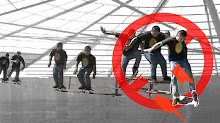
Skate the City Activate the City Own the City A skateboarder crisscrosses the city down sidewalks, through the streets with no particular destination, just an indirect path taking him from waxed curb to bench to handrail to hip. As he shifts from feature to feature, he occasionally stops at one to take a second and third run at a handrail or a hipped curb each time performing a different variation of ollie to slide or grind. He approaches two driveways separated by a six-foot long hip. As he gets closer, his concentration intensifies until his complete focus is on ollying the space between the two driveways.
He ollies and for that brief moment in time, while he’s in mid-air, his mind is completely and unquestionably concentrated on grabbing the skateboard frontside and tweaking it out before landing on the far side of the hip. In that moment there are no thoughts of school, work, family, politics or anything else that may have been on his mind a minute ago. He is completely within that moment.
As he lands, a brief smile curls up the corners of his mouth as he articulates a  new destination and starts heading toward a building two blocks away that has benches and a handrail. Half of a block down he notices another hip between two driveways and proceeds to ollie it. As he approaches the hip and his concentration begins to focus on the performance, a crack in the sidewalk grabs his skateboard and holds on as he keeps going, briefly, and slams down on the sidewalk.
 As he picks himself up, he looks at the crack and wonders where it came from and why he didn’t see it. He grabs his skateboard and makes a second run at the hip, ollies to tail grab, stops, and makes a third run. Then a fourth. He was doing more than
 occupying the space temporarily, he was owning the space.
He continues to the next location to skate the benches and handrails, to activate the city. Everytime he crosses this part of the city, he alters his course so he can stop and ollie the hip where the crack in the sidewalk that once grabbed his attention is. The space he now owns.
Nomadic Subcultures of an Urban Environment
Within any urban setting, there are multiple subcultures already dependent on mobility or any variety of the idea of mobility. It is this  mobile element that is in opposition to the institution of architecture and its connotations of permanence and stability.
Here in San Diego, there is a large homeless population who navigate the streets daily. Due to the “No Loitering” laws, they must be ready to move at any moment and take their  belongings with. Though they may often inhabit the same neighborhoods for long periods of time, they will usually move around during the day and need to be able to store their
  belongings which can include extra clothing, bedding, and eating utensils in the nooks and voids of the city.
 There are other models of mobile architecture in San Diego seen in the farmers’ markets that occur in different locations in the city each day and the Swap Meets that occur in vacant parking lots on the weekends. These markets are constructed, deconstructed, and moved around to different locations
 everyday. The ease of this type of construction allows not only for the mobility of the architecture, but also its recyclability, an essential element of nomadic life.
Other forms of temporal inhabitation can be seen in the idea of the trailer parks. Although they typically stay in a location for  many years, the mobile home is essentially a house that is designed to be moved easily. Because of the simple construction, it is also easily modified to fit future needs.
Many aspects of contemporary youth culture also reflect a desire for mobility from the example of the skateboarder moving through the city, to the people traveling around the world. Raves are also a youth phenomenon with a mobile  element. Because of their illegal nature, they must take place in a different location each time. Burning Man, a music festival that takes place in Northeastern California or Nevada where an ephemeral city is constructed in the desert of for a long weekend every year in the fall. Nomadic behavior is not a new or even ancient phenomenon, but an ongoing struggle between the fixed and the unfixed that is always taking place.